Monday, 24 March 2014

The Difference Between Academic & Non-Academic Materials


It's vital to understand the difference between those materials which are "academic" and those which are not. So here's a reminder for everyone.

Academic materials are written by academic researchers, usually attached to universities. These people are considered to be experts in what they are writing about and their views and opinions have authority. Using them in your assignments will give authority to your work and will help you to get better grades.

The most authoritative materials of all are those which have been peer-reviewed. This means that the material is first scutinised by a panel of academic researchers who will assess it for quality. Only if they consider it of a suitable standard will they allow it to be published.

The most usual sources of academic material are:
  • Journals
  • Books
  • Conference proceedings
  • Research reports
  • Postgraduate dissertations & theses
All of the above can be found by using DISCOVER. Be sure to tick the box for "peer-reviewed" if you want to find only peer-reviewed materials.

Non-academic materials are not written by academic researchers and the authors may not be experts in what they are writing about. The work is unlikely to be researched in depth and does not have the same authority as the academic sources. Relying only on non-academic sources for assignments means that your work does not have authority and you are unlikely to get a very good grade.

Some of the most examples of non-academic materials include:
  • Newspapers
  • Magazines
  • DVDs
  • TV & radio programmes
  • Websites
  • Youtube videos

Linking to articles in DISCOVER

Last week a student came to see me who was panicking. She had searched DISCOVER and found some vital articles for her assignment but had then simply copied the URL at the top of each page into a Word document. When she tried clicking on the link to retrieve her articles she couldn't find them.

To avoid this happening to you I would recommend setting up a personal account with DISCOVER and saving any useful articles that you find. This is really easy to do:
  1. Go to DISCOVER.
  2. Click on Sign In (top right of the screen).
  3. Click on Create a new account on the Sign in to my EBSCOhost page.
  4. Fill in the form (make a note of the username and password you choose).
  5. Click the Save Changes button.
You've now created your own account with DISCOVER and can save any articles you add to the Folder so they'll be waiting for you next time you sign in.

Monday, 10 March 2014

International Women's Day

Saturday 8th March 2014 was International Women's Day. In celebration, Routledge have put together a free to access collection of articles from a wide range of journals. 
 
This year's IWD theme is 'Inspiring Change'. To reflect this, this campaign is split into four collections that celebrate the social, political and economic achievements of women internationally: 
 
- Women and Politics
- Women and Development
- Women, Work and Business
- Inspirational Women


You can access the free articles here: http://bit.ly/1ictaaY

Monday, 27 January 2014

Students With Assistive Status

Learning Resources provide a large range of services for staff and students who are identified as having a disability either through the Student Record System (SITS) or the HR System (TRENT).

Individuals who disclose a disability to LRC/Library staff, which is not known to the University, will be referred to the Health and Wellbeing Team.

Services for students with assistive status include:
  • Individual assistance
  • Unlimited renewals
  • Waived fines (excludes other sanctions including blocked borrowing and charges for replacement)
  • Training and support in the use of assistive software
  • All our LRCs are accessible for wheelchair users
  • Lifts are available to allow access to all floors
  • Specialist software and equipment
  • Staff are disability aware and are happy to help you
To learn more about the services we provide for those with disabilities please visit our Services for Students with Assistive Status pages at: http://lrweb.beds.ac.uk/libraryservices/additional

The contact for services at Bedford Library is:

Sue Csoka
sue.csoka@beds.ac.uk
Tel:  01234 793189

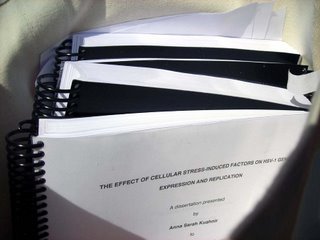
Binding at Bedford Library


From January 2014 onwards self-service binding will no longer be offered at Bedford Library.

All binding will now be carried out by the Copy Shop in Room P0.55 who will provide a professional service.

Wednesday, 27 November 2013

Children's Commissioner's Report Says Child-On-Child Abuse Is Shocking

An official report by the Office of the Children's Commissioner for England says that "shocking" sexual violence is being carried out by children against other children. The report says that the perpetrators could be 12 or 13, and rape is seen as "normal and inevitable" in some areas, especially among gangs. It also claims that bullying and sexist attitudes exist across the whole country.

The Research conducted by the University of Bedfordshire into sexual violence in gangs (It's wrong but you get used to it) suggested two-thirds of young people questioned (65%) knew of young women who had been pressurised or coerced into sexual activity. 


The report is the result of a two-year inquiry by the children's commissioner into child exploitation and gangs. It is being published alongside research on young people's understanding of consent to sex, and a study on the pressures on young people who have been raised in gang-affected neighbourhoods. It says legislation is there to protect children but agencies from the police to social services need to become far better at spotting children at risk and providing them with the necessary protection.


Wednesday, 2 October 2013

Skills to Succeed Workshops - Bedford

Skills to Succeed Workshops at Bedford

Learning Resources and Student Support are offering a range of workshops to help you to develop the esssential skills you'll need in order to be a successful student.

All workshops are FREE to attend and offered on a first-come, first-served basis. 
 
  • 8th October 2013, 10.00-11.00 How to: Get organised & manage time. Room P1.23

  • 9th October 2013, 09.00-10.00 How to: Create effective notes. Room P1.20

  • 9th October, 2013, 11.00-12.00 How to: Read academic materials. Room P2.03

  • 14th October 2013, 09.00-10.00 The Benefits of Positive Thinking, Room P0.60

  • 16th October 2013 10.00-11.00 How to: Plan & structure an assignment, Room P1.13

  • 16th October 2013 11.00-12.00 How to: Write academically, Room P2.03

  • 17th October 2013 10.00-11.00 How to: Paraphrase & summarise text, Room P2.19

  • 21st October 2013 09.00-10.00 Motivation: Keep the switch, Room P0.60

  • 24th October 2013 10.00-11.00 How to: Show critical thinking in an assignment, Room P1.20

  • 24th October 2013 14.00-15.00 How to: Read a journal article, Room K0.01

  • 28th October 2013 09.00-10.00 Managing stress, Room P0.60

  • 29th October 2013 How to: Write academically, Roo P1.13

  • 1st November 2013 11.00-12.00 How to: Plan & structure an assignment, Room P1.13

  • 1st November 2013 12.00-13.00 How to: Give a presentation, Room P1.13